

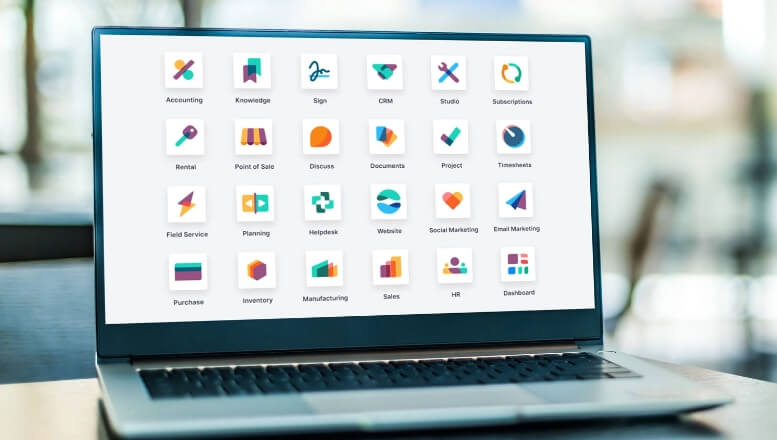
Understanding Odoo ERP for Canadian Businesses
Odoo is a modular, open-source ERP widely adopted by small and medium-sized businesses across Canada. Many organizations choose Odoo ERP in Canada to implement only the modules they need, such as accounting, inventory, manufacturing, CRM, and sales, while keeping costs under control.
Odoo offers a flexible structure that helps Canadian businesses adapt as they grow. With a lower total cost of ownership and faster implementation timelines, it provides a practical alternative to complex ERP platforms. Easy customization supports local requirements, while the user-friendly interface reduces training effort and speeds up user adoption. Overall, Odoo ERP suits Canadian companies seeking agility, scalability, and cost efficiency without added complexity.

12 million + Users

44,000 + Integrated Apps

1 to 24 months To be Implemented

3,600 + employees
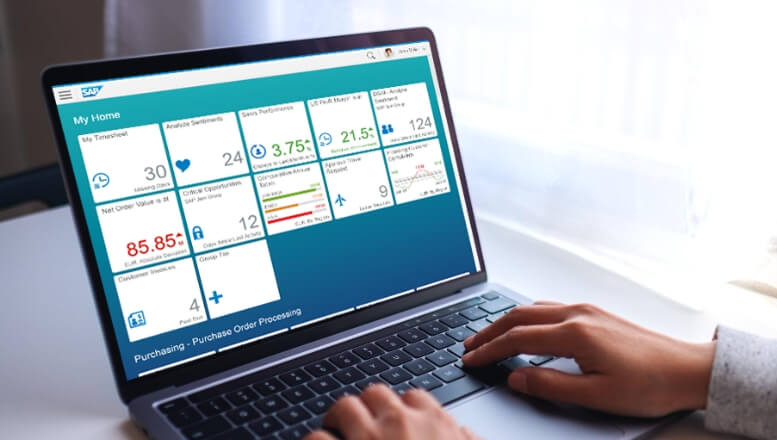
Understanding SAP ERP in the Canadian Market
SAP ERP is an enterprise-grade solution widely used by large organizations across Canada to manage complex operations, regulatory requirements, and multi-location workflows. It offers strong scalability, advanced analytics and reporting, robust compliance and governance features, and deep system integration capabilities. Due to its ability to support complex, multi-entity environments, SAP ERP is commonly chosen by large Canadian enterprises with higher budgets and long-term ERP strategies.
200 million + Users
300 + Integrated Apps
3 to 10 months To be Implemented
5,000 + employees
Compare Odoo vs SAP ERP in Canada: Which ERP Fits Your Business?
Choosing the right ERP system is a key decision for Canadian businesses looking to improve efficiency, control costs, and support long-term growth across departments and operations. Odoo ERP and SAP ERP are two popular solutions in Canada, but they serve different business sizes and operational needs across industries. This comparison helps Canadian SMEs and enterprises evaluate functionality, scalability, and cost considerations, while also assessing implementation effort, user adoption, long-term support, overall return on investment, system flexibility, and how well each solution supports future digital transformation goals, operational maturity, and evolving market demands. For a deeper understanding of Odoo’s capabilities, explore our Odoo ERP services.
Features Comparison
Inventory Management


Multi-Warehouse

Storage Locations
Bin Replenishment
Mobile Device Support
Multi-Company
Multi-Currency
Multi-Language
Automatic ASN (Advanced Shipping Notice)Automatic ASN (Advanced Shipping Notice)

Package Management / Cartoning
Freight Carrier Integration
Manage Consignee Stocks
EDI (Electronic Data Interchange)
Non-Stocked Inventory
Multiple Variants
Multiple Units of Measure
Inter-Classe UoM Conversion
Variant Matrix
Lots / Serial Numbers
Up / Down Traceability
360° Traceability
Expiration Dates
Cycle Counting
Inventory Forecasts
Inventory Valuations
ABC Analysis
QR Code Support
RFID Support
Lots / Serial Numbers Support
Receptions
Picking
Internal Moves
Delivery Orders
Inventory Adjustments
FIFO / LIFO
Customizable Routes
Putaway Strategies
Wave Picking
Batch Picking
Zone Picking
Cluster Picking
Cross-Docking
Putaway Locations
Supply Chain
Vendor Data Management
Vendor Pricelist Management
Inbound Quality Control
Dropshipping
Purchase Requests
Purchase Orders
Purchase Approval Workflow
Request for Quotations
Contracts / Purchase Agreements
Minimum Stock Rules
Make-to-Order
Master Production Schedule
Manufacturing
Multi-Level BoM
By-Products / Co-Products
Routings
Subassemblies
One BoM for Multiples Product Variants
BoM Versioning
Multiple BoM / Routing
Demand Forecasting
MRP Scheduler
Gantt Chart Scheduling
Kanban Planning
Production Calendar
Infinite Capacity Scheduling
Finite Capacity Scheduling
Multiple Scheduling Plans
Delivery Date Calculation
Production Order Splitting / Merging
Manufacturing / Production Orders
Job Tracking
Work Orders / Operations
Automated Time Tracking
Disassembly Orders
Subcontracting
Rework / Repair
Scrap
Disposal Strategies
Kits
Edit Individual Production BoMs
Perpetual Inventory Valuation
Periodic Inventory Valuation
Standard Price
FIFO / LIFO
Landed Costs
Actual Production Labor
Production Order Costing
Shop Floor Terminals
Production Activities
Non-Production Activities
Time Tracking
Messages on Work Orders
Barcode Support
Equipment / Machine Management
Work Instructions on Work Orders
Maintenance Requests from Shop Floor Terminal
Schedule Management
Touchscreen Attendance
Timesheets
Breaks
Overtime
Vacation / Injury
Overall Equipment Efficiency
Work Time
Demand Forecast
Maintenances KPIs
Production Costs Analysis
Analytic Accounting
CSV Export
Dynamic Pivot Tables
Dashboards
Save Custom Reports
Maintenance
Schedule Preventive Maintenance
Maintenance Kanban
Maintenance Calendar
Shop Floor Integration
Multiple Teams / Sites
Asset Management
Subcontract Repair
Job Tracking
Inventory Management
Purchasing Integration
Rotating Asset Location
Equipment Serial Numbers
Equipment Maintenance History
Dealer Portal
QMS
At Reception
In-Process
Before Delivery
Inventory Quarantine
Quality Control Plan
Pass/Fail Checks
Measurement Checks
Quality Alerts / Nonconformance Documents
Print Nonconformance Documents
Corrective Actions
Documentation Management
Customer Satisfaction Surveys
Customers Complaints Management
Traceability of Operations
Resources Management
Nonconformance Costs
PLM
Engineering Change Orders (ECOs)
BoM Versioning Management
Routing Version Management
MRP Integration
Centralized BoM Management
Approval Workflows
BoM Version Difference Viewer
Bulk BoM Updates
Notification Mechanism
Project eMail Gateway
ECO Costing
AutoCAD
SolidWorks
Autodesk
Usability, Pricing & Conditions
Full Web Interface
Mobile App
App Store / Add-ons
Free Trial
Open-source
Different solutions,
Different needs
- Both Odoo and SAP cater to distinct business needs and operational priorities:
- Budget-Conscious Businesses: Odoo is a great fit for organizations seeking an affordable yet powerful ERP solution that evolves with their needs.
- Enterprise-Level Operations: SAP Business One is tailored for organizations that require robust data handling, advanced analytics, and compliance management. By assessing their business goals, size, and operational challenges, organizations can make an informed choice between these two solutions.
| Comparison Factor | Odoo ERP | SAP ERP |
|---|---|---|
| Business Size | Ideal for Canadian SMEs and growing companies | Designed for large Canadian enterprises |
| Cost & Licensing | More affordable for Canadian businesses | Higher licensing and implementation costs |
| Customization | Open-source and highly customizable | Customization often requires additional investment |
| Implementation Timeline | Faster deployment for Canadian projects | Longer implementation due to system complexity |
| User Experience | Simple, modern, and user-friendly interface | Feature-rich but requires formal training |
| Scalability | Scales well for growing Canadian businesses | Built for enterprise-level expansion |
Odoo vs SAP ERP: Key Differences for Canadian Businesses
Both ERP systems are strong but serve different needs.
Looking for ERP Implementation
in Canada?
Work with experienced ERP consultants in Canada to evaluate
your requirements and select the right ERP solution for your business.
More Odoo ERP Comparisons
Odoo vs Microsoft Dynamics
Odoo vs Netsuite
Odoo vs Quickbooks
Odoo Vs Salesforce
Frequently Asked Questions
Odoo is better for small and medium-sized businesses due to its flexibility and lower cost, while SAP is suitable for large enterprises with complex requirements.
Yes, Odoo generally has a lower total cost of ownership compared to SAP ERP, especially for SMEs.
Odoo scales well for growing businesses, but SAP is built specifically for large-scale enterprise operations.
Odoo implementations are usually faster due to its modular structure, while SAP implementations take longer.
Yes, Odoo is open-source and highly customizable to match specific business needs.